
Author: Brian Kurrus, CFP®
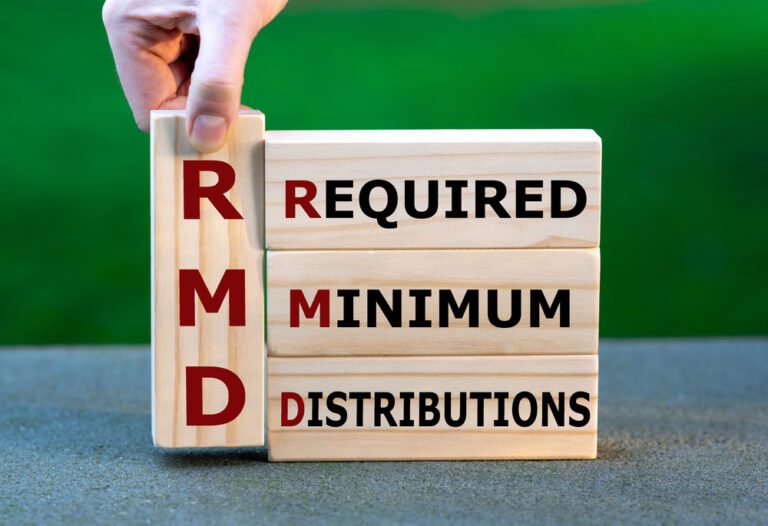
For many years you may have contributed to your Traditional TSP, IRA or other retirement accounts while benefiting from tax-deferred growth. Eventually, the IRS requires you to begin taking money out and paying taxes on the distributions. These withdrawals are known as Required Minimum Distributions, or RMDs.
When Do RMDs Begin?
For most people approaching retirement today, RMDs begin at age 73 or 75, depending on birth year.
If you were born from 1951 through 1959, your RMD age is 73. If you were born in 1960 or later, your RMD age is 75.
Traditional IRAs are subject to these rules regardless of whether you are still working. Federal employees who remain employed beyond their RMD age can generally postpone RMDs from their TSP until after separating from Federal service.
Traditional TSP vs. Roth TSP
Traditional TSP contributions are generally made pre-tax, grow tax-deferred and are taxed when withdrawn. Roth TSP contributions are made after-tax and qualified withdrawals are generally tax-free.
Roth TSP balances are no longer subject to lifetime RMDs for the original owner, while Traditional TSP balances remain subject to RMD requirements.
How Is Your RMD Calculated?
Your annual RMD is generally based on your retirement account balance as of December 31 of the previous year and a life expectancy factor provided by the IRS.
For example, at age 75 the current IRS factor is 24.6. A $500,000 balance would produce an RMD of approximately: $500,000 ÷ 24.6 = $20,325
The percentage required generally increases as you get older. Distributions from a Traditional TSP or Traditional IRA are generally taxable as ordinary income.
You can generally delay your first RMD until April 1 of the following year, but doing so may result in two taxable RMDs being taken in the same calendar year.
Inherited Retirement Accounts
For many non-spouse beneficiaries, the account must be completely distributed by the end of the tenth year following the original owner’s death.
Depending on the circumstances, annual distributions may also be required during that period.
Spouses and certain other eligible beneficiaries may qualify for different treatment, including distributions based on their own life expectancy.
Qualified Charitable Distributions
If you are charitably inclined and at least age 70½, you may want to consider a Qualified Charitable Distribution, or QCD.
A QCD allows funds to be transferred directly from an IRA to an eligible charity. When properly completed, the distribution can count toward your IRA RMD while generally being excluded from taxable income.
Plan Ahead Rather Than Just Taking the Minimum
RMD planning can be most effective when it begins years before distributions are required.
If future RMDs may exceed what you would otherwise need to withdraw, strategies such as Roth contributions, earlier withdrawals, QCDs and Roth conversions may help reduce future taxable distributions.
Roth conversions can be especially useful during lower-income retirement years, although the decision should be based on your current tax rate compared with the rate you expect later.
Summary
Required Minimum Distributions can affect taxable income, Medicare premiums, retirement cash flow and estate planning.
Projecting future RMDs can help determine whether changes to your retirement withdrawals, Roth conversions or charitable giving strategy should be considered.
Brian Kurrus, CFP® specializes in working with families and small business owners; his mission is to provide his clients with a diverse range of wealth management ideas and solutions. His specific areas of focus are estate conservation, business succession strategies, retirement funding, long-term care issues, life insurance, and disability income insurance. Brian has been an instructor for NITP since 2017.
This newsletter is designed to provide information on the subjects covered. NITP, Inc. takes great care to insure the accuracy and quality of these materials which are provided without any expressed or implied warranty, including, but not limited to, their fitness for a particular purpose. They are also provided with the understanding that neither the author nor the publisher is engaged in rendering legal, accounting, financial planning or other professional service. If additional assistance is required, the services of a competent professional should be sought.
